Culture

Sort by
Order
| January 2023
Understanding the coloniality of gendered lives, family dynamics, social arrangements, and political structures in Indigenous Wixárika communities in Jalisco State, Mexico begins with confronting and interrogating a history written largely by and for men in positions of power. The archives are limited in terms of what can be gleaned about gender equality and what existed before the proliferation of European patriarchy. Joan Scott (1988) argued that the incorporation of gender as a category of analysis should elucidate the integral role that women have played in the historical process, rather  than forming the basis of a specific chapter about women.
| January 2023
Understanding the coloniality of gendered lives, family dynamics, social arrangements, and political structures in Indigenous Wixárika communities in Jalisco State, Mexico begins with confronting and interrogating a history written largely by and for men in positions of power. The archives are limited in terms of what can be gleaned about gender equality and what existed before the proliferation of European patriarchy. Joan Scott (1988) argued that the incorporation of gender as a category of analysis should elucidate the integral role that women have played in the historical process, rather  than forming the basis of a specific chapter about women.
| January 2022

Traditional mycological knowledge (TMK) is complex, not distributed equally among the entire population, and constantly adapting to current social situations. There are sociocultural factors that could influence the fact that some people retain a greater wealth of knowledge, for instance, cultural affiliation, migration, occupation, level of schooling, and person’s age.

| January 2022

Traditional mycological knowledge (TMK) is complex, not distributed equally among the entire population, and constantly adapting to current social situations. There are sociocultural factors that could influence the fact that some people retain a greater wealth of knowledge, for instance, cultural affiliation, migration, occupation, level of schooling, and person’s age.

| November 2021
On December 18, Mexico City and neighboring Mexico State entered a weeks-long coronavirus lockdown for the first time since the spring. The next evening, I hid in a sleeping bag surrounded by people vomiting in a small park near the famed Teotihuacán pyramids outside the capital, as dozens consumed the psychedelic peyote cactus at a clandestine ceremony.
| November 2021
On December 18, Mexico City and neighboring Mexico State entered a weeks-long coronavirus lockdown for the first time since the spring. The next evening, I hid in a sleeping bag surrounded by people vomiting in a small park near the famed Teotihuacán pyramids outside the capital, as dozens consumed the psychedelic peyote cactus at a clandestine ceremony.
| February 2021

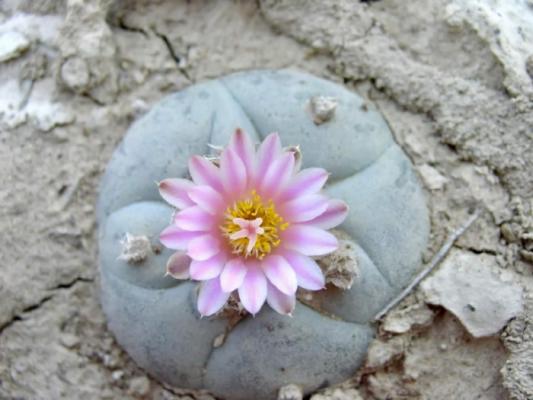
This three-part web series joins Dr. Bia Labate on an eye-opening road trip through West Texas to meet Dr. Martin Terry, one of the world’s leading experts on Lophophora williamsii (peyote). Spanish and English subtitles available. In episode onePeyote Territory, Bia Labate and Martin Terry trek through peyote’s natural habitat in what is today Texas and discuss its unusual morphology, psychoactive nature, history of human interest, and Martin’s irrepressible zeal for all things cacti.

| January 2021
“Let’s Talk About Hikuri” (‘Hablemos de Hikuri’) is a project that was designed to create spaces for dialogue about hikuri (Lophophora williamsii), or peyote, in order to provide debates and reflections on the use and consumption of this cactus and consider proposals for its protection and use.
| June 2020
Article detailing the impacts of the "Psychedelic Rennaissance" on peyote conservation, peyote politics and the appropriation of Wixarika culture by global consumers.
| July 2018
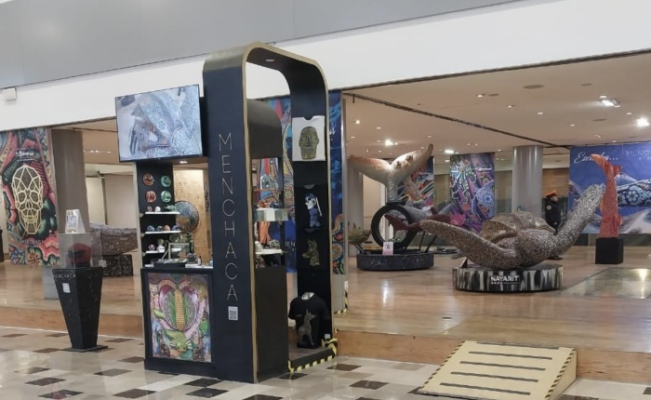
A group of 15 Wixáritari people have been working around the clock during the last seven weeks to finish the 32 pieces of an 882-square foot mosaic that will weigh two tons.